
Cyclone Preparation for Your Gutters in Queensland
The short answer
Get your gutters and downpipes cleaned weeks before cyclone season, while the weather's calm. Queensland's 2021 cyclone preparedness guide says blocked gutters can let large volumes of rain into a home during a cyclone. Once a watch or warning is out, stay off the ladder and the roof. Afterwards, check the gutters from the ground.
By Guaranteed Gutter ProtectionLast updated
01 / Details
How Do I Get My Gutters Ready for a Cyclone?
Get them cleaned out early in the season, while it's dry and calm. A cyclone can bring strong wind and very heavy rain, and you want that water off the roof fast. Book a gutter clean well before any watch goes out, ideally before the season starts in November.
The Queensland Tropical Cyclone Preparedness Guide (opens in a new tab), written in 2021 by Queensland Fire and Emergency Services (QFES) and the Cyclone Testing Station, puts it plainly: “Blocked, damaged or leaking gutters can lead to large volumes of rainwater entering a building during a cyclone.” Its advice is to “Clean gutters and downpipes regularly to prevent them from becoming blocked”, so water can “drain away as quickly as possible during a cyclone.”
On a clean, we clear out the leaves, twigs and sludge. Then we check the water runs along each gutter and out the downpipe. If your downpipes need clearing too, mention it when you book and we'll tell you if that's included.
02 / Details
Why Do Blocked Gutters Matter More in a Cyclone?
Because wind-driven rain can get into a house even when the roof holds. The QFES guide warns it can cause “significant damage to ceilings, internal walls, carpets, furniture and belongings”, even when the roof and walls aren't damaged. It names the ways in: through vents, under flashings and through the weep holes in windows and sliding doors.
Wind is the other risk. The guide lists “Failure of inadequately secured gutters, flashings, fascia and eaves” among the most common types of cyclone damage in Queensland. It says even gutters in good condition can be damaged if they aren't fastened to the roof properly. And “Damaged gutters can also become wind-borne debris.”
Fixing them later isn't cheap. In the guide's words, “The cost of repairing the guttering can be substantial if scaffolding is required.”
Already seeing water spill over the gutters in an ordinary summer storm? Fix that before cyclone season. Our guide to overflowing gutters covers the usual causes and who fixes each one.
03 / Checklist
Your Gutter Checklist Before Cyclone Season
- 01Book the clean before NovemberThe QFES guide says coastal Queensland, from the Gold Coast up to the Gulf of Carpentaria, could be hit by a cyclone any year between November and May. So aim to have it done by the start of the season.
- 02Ask about the downpipesA clear gutter only helps if the downpipe can take the water away. The checklist for preparing your property, on the SES site, says “Clean out gutters and downpipes.” Mention yours when you book.
- 03Look for leaks and loose runs from the groundStand back and look along each gutter. Sagging runs, drips at the joins or a gutter pulling away from the fascia are worth sorting early. The guide says “Repair or replace leaking gutters.” and “Make sure gutters are securely fastened”, with extra gutter clips if they're needed.
- 04Get a professional to check anything that worries youThe guide asks owners to inspect their property “annually, before the cyclone season and after a cyclone”. If you have doubts about its condition, it says to get a qualified building practitioner to inspect it.
- 05Plan your warning-day jobs nowDecide where the outdoor furniture, pot plants and bins will go. When a warning comes, you'll want a short list of jobs you can do from the ground.
04 / Details
Do Cyclones Reach Brisbane, the Sunshine Coast and the Gold Coast?
They can. The QFES guide puts our part of Queensland in an intermediate wind region, where “cyclone winds are possible but are generally not as intense.” It also says that every year between November and May, coastal Queensland “from the Gold Coast to the Gulf of Carpentaria” could be hit by a cyclone.
It records cyclones that made landfall here, like the Great Gold Coast Cyclone of 1954. Others came close and stayed out at sea. The guide names Dinah in 1967 and Oma in 2019, which still caused “significant impacts from wind, rain and waves.” So the gutter jobs belong on your list every season, wherever you live on this stretch of coast.
For the rest of the house, from the roof to the yard, use our storm season checklist. This guide sticks to the gutters.
05 / Details
What Should I Do About the Gutters Once a Warning Is Out?
Leave them alone. Once a cyclone watch or warning has been issued, or the wind has picked up, don't climb a ladder or go onto the roof for any reason. No gutter job is worth that risk. Your jobs now are on the ground, getting loose things out of the wind.
That's why the clean goes first. The QFES checklist does put “Clean out gutters and downpipes.” on its checklist for preparing your property (opens in a new tab), which NEMA describes (opens in a new tab) as a list for “when a cyclone alert has been issued”. We'd have it done weeks before, so it's never a job you rush on a ladder in rising wind.
The Queensland Government's cyclone page (opens in a new tab) lists the jobs for when you hear a warning. Two of them are “Move wheelie bins inside or fill with water” and “Secure outdoor furniture, and any other loose outside items: these can become dangerous missiles during high winds”.
Looking after an older parent's house? Make the call for them early in the season. Our guide on whether gutter cleaning is dangerous covers what hospital research says about ladder falls at home.
06 / Details
What Should I Check on the Gutters After a Cyclone?
Wait for the all-clear, then look from the ground. The Queensland Government says “The time immediately after a cyclone is often as dangerous as the event itself.” Its advice is to “remain indoors until advised it is safe to go outside” and to “stay away from damaged powerlines, fallen trees and flood water”.
Once it's safe, walk around the house and look up. Note any gutter that's sagging or pulled away from the fascia, a downpipe hanging off the wall, and branches or leaf piles sitting in the gutter. Check the ceilings inside for new water stains. Take photos before anything gets moved.
Then call the right people. For storm damage that isn't life-threatening, Queensland's disaster management site (opens in a new tab) says to “Call Queensland State Emergency Service (SES) 132 500”. In a life-threatening emergency, call Triple Zero (000). If your home can't be lived in, the government says to contact your local council. For damage to the house itself, the QFES guide says to get a qualified building practitioner to inspect it.
Gutters that are just full of storm debris are our job. Once the weather's settled and the roof is safe to work on, we'll clear them out. We're fully insured, and quotes are free.
07 / Details
Would Gutter Guard Help Next Cyclone Season?
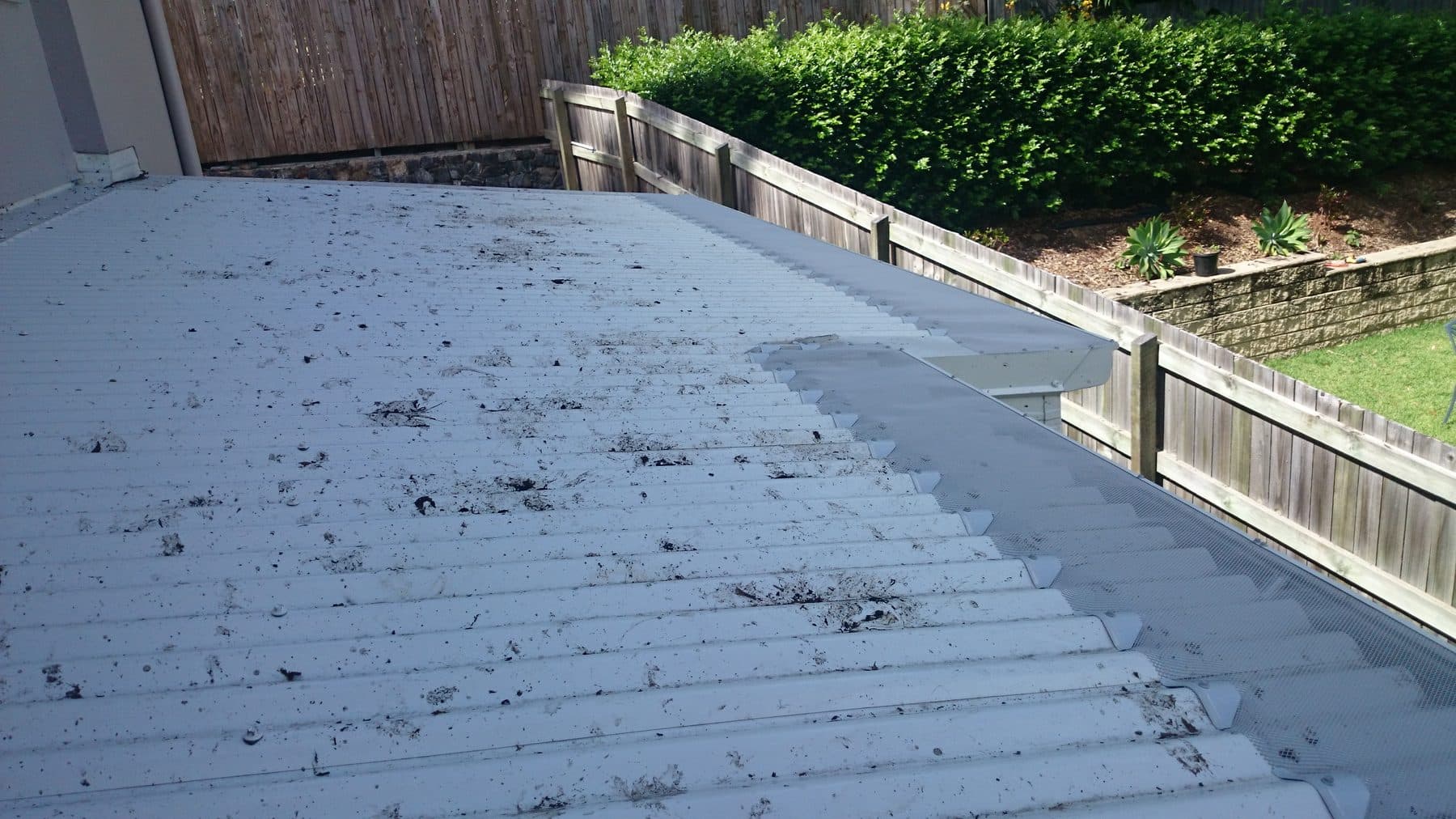
It helps with the blocking. Gutter guard keeps leaves out of the gutter between seasons, so you're less likely to reach November with gutters full of debris. It won't make a roof or a gutter cyclone-proof, and we don't sell it that way. How well the gutters are fastened still matters.
Our aluminium mesh comes with a free gutter clean at install and a written 10-year no blocked gutter guarantee. We've been family-owned for over 25 years, and we fit it across Brisbane, the Sunshine Coast and the Gold Coast. Want to know how mesh copes in a downpour? Read how gutter guard handles heavy rain.
More Questions
More Questions, Answered
What's the difference between a cyclone watch and a cyclone warning?
The Queensland Government (opens in a new tab) explains that a cyclone watch is issued when cyclonic winds are expected within 24 to 48 hours. A warning is issued when they're expected within 24 hours. Either way, gutter work should already be done by then. Once a watch is out, keep to jobs you can do from the ground.
Is it safe to go outside in the eye of a cyclone?
No. The Queensland Government (opens in a new tab) says some people go outside in the eye of a cyclone, mistakenly believing it has passed. The calm is only the middle of the storm. Depending on the wind gusts, the eye may pass in a few minutes or a few hours. Don't go out to check the gutters. Stay inside until you hear official advice that it's safe.
How do I get cyclone alerts on my phone in Queensland?
Queensland's disaster management site (opens in a new tab) says Emergency Alert messages come from +61 444 444 444. Make sure that number isn't blocked and save it as a favourite. Then, even on do not disturb, you'll still get the alert day or night. AusAlert (opens in a new tab), Australia's new national warning system, also sends cyclone messages to compatible phones, so keep your phone's software up to date.
Has Brisbane ever had a cyclone?
Cyclones can reach Brisbane, along with the Sunshine Coast and the Gold Coast. A QFES guide places this stretch of coast in an intermediate wind region. That means cyclone winds are possible, though generally not as intense. The guide also lists cyclones that crossed the coast here, such as the Great Gold Coast Cyclone of 1954.
Sources checked
- Queensland Fire and Emergency Services, Cyclone Testing Station and Geoscience Australia, Queensland Tropical Cyclone Preparedness Guide (June 2021) (opens in a new tab)nema.gov.auChecked
- National Emergency Management Agency, Queensland Tropical Cyclone Property Preparedness Guide (opens in a new tab)nema.gov.auChecked
- Queensland State Emergency Service, Checklist to Prepare your Property (opens in a new tab)ses.qld.gov.auChecked
- Queensland Government, Cyclones and severe storms (opens in a new tab)qld.gov.auChecked
- Queensland Government, Disaster Management (opens in a new tab)disaster.qld.gov.auChecked
- Queensland Government, Disaster Management, Watch for the warnings (opens in a new tab)disaster.qld.gov.auChecked
- National Emergency Management Agency, AusAlert (opens in a new tab)ausalert.gov.auChecked
Keep Reading
Related Guides
Storm Season Checklist for Queensland Homes: Gutters First
What to check before the summer storms, starting with the gutters.
Updated
Why Are Your Gutters Overflowing? What Causes It and Who Fixes It
What makes gutters overflow, how to spot the cause from the ground, and who to call for each one.
Updated
Is Gutter Cleaning Dangerous? When to Get Off the Ladder
What Queensland hospital research says about ladder falls at home, and when to hand the gutters over.
Updated
Do Gutter Guards Work in Heavy Rain? What Happens in a Queensland Storm
Why rain sometimes runs over a gutter guard in a storm, and what to ask before you buy.
Updated
Blocked Downpipe? How to Spot It From the Ground and Who Fixes It
How to tell a blocked downpipe from a blocked gutter, from the ground, and who to call for each.
Updated
Book a Gutter Clean
Free quotes across Brisbane, Sunshine Coast and Gold Coast. No gutter guard required.